
Does anyone belong?
Perhaps alienation is our truest state.

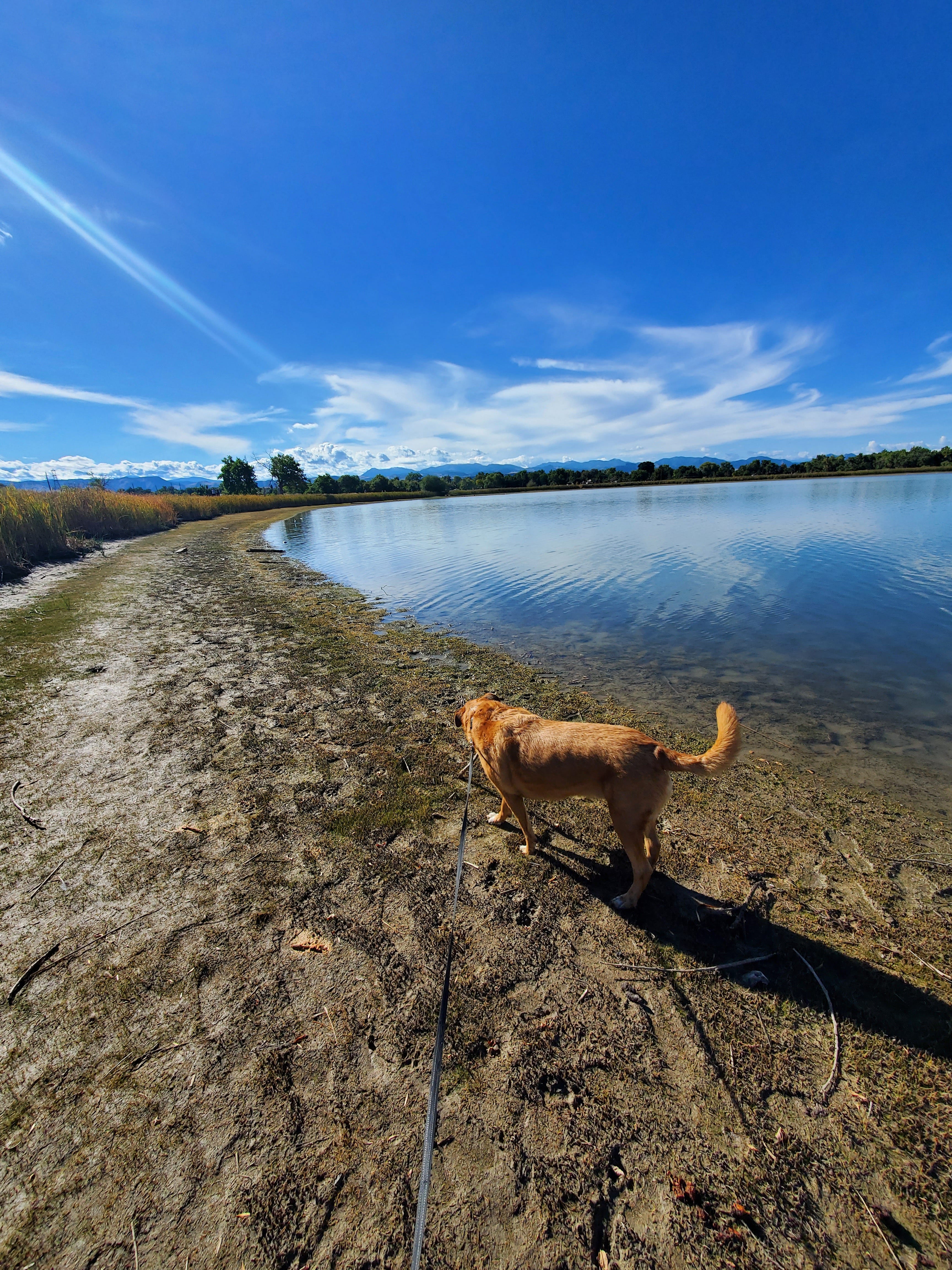
A couple months ago, I was walking my dog at the park like I do most days. That particular day, the pollen count was high and my allergies terrible, so I wore a mask. Hardly anyone wears a mask indoors in Denver these days, and absolutely nobody does so outdoors (at least not that I’ve seen). My dog dragged his feet, trying to hoover up the goose poop camouflaged in the grass. I felt self-conscious, irritated, impatient. I yanked at his leash. But then I saw the red-winged blackbirds on the cattails that fringed the park’s cerulean lake. I felt the coolness of the approaching fall on my skin.
I took a deep breath. In, out.
Then a guy biked by me. “Nice mask!” he jeered. I turned back, curses already forming on my tongue. But he was gone. What a dick, I thought, and tried to let it go.
As we rounded the bend, I remembered I needed to call my mom. It had been a few weeks since we spoke. I’ve learned to call her while my body was occupied doing something else—the dishes, cooking, walking the dog. That helps limit the damage.
Our conversations tend to be one-sided: she has the same tick that I think a lot of upper-caste India-born Indians do, which is a dazzling inability to listen. She cuts other people off, asks questions solely for the sake of answering them herself, and cannot handle any bad news without collapsing into tears or flying into a tearful rage. Either way, tears are involved. So I never tell her any bad news. I don’t tell her any news, or anything meaningful about my inner life, because that’s simply not the type of relationship we have.
For the most part, I’ve accepted that. But that day, already tender from the biker’s insolence, my mom’s behavior bothered me more than usual. She asked about the weather in Denver; as I was answering, she started rambling about how infernally hot it had been in Calgary. She complained about her doctor and the endless waiting period for a procedure she needed to have, then sighed. “At least I’m not in US, thank god.” I had to remind myself she wasn’t trying to rub my misfortune in my face.
We moved on to some upcoming travel plans of mine: would they be disrupted by the recently announced government shutdown? “See, this is why I never travel anymore,” she announced. “All this delay, going to the airport, coming back from the airport — chee, it’s not worth it!” She hadn’t visited me in three years. A direct flight from Calgary to Denver is 2.5 hours.
When she finally, mercifully hung up, I felt battered. A few feet away, a woodpecker hammered away at an olive tree. It’s one thing to have such a conversation with a clueless acquaintance, but another thing to have it with the woman who birthed you, who knew you before you had any conscious sense of self. There is no alienation as acute as not being seen by your own kin. I’d known this for a long time—but would I ever fully accept it? Or would I always be that girl who longed to be heard and held by her mother?
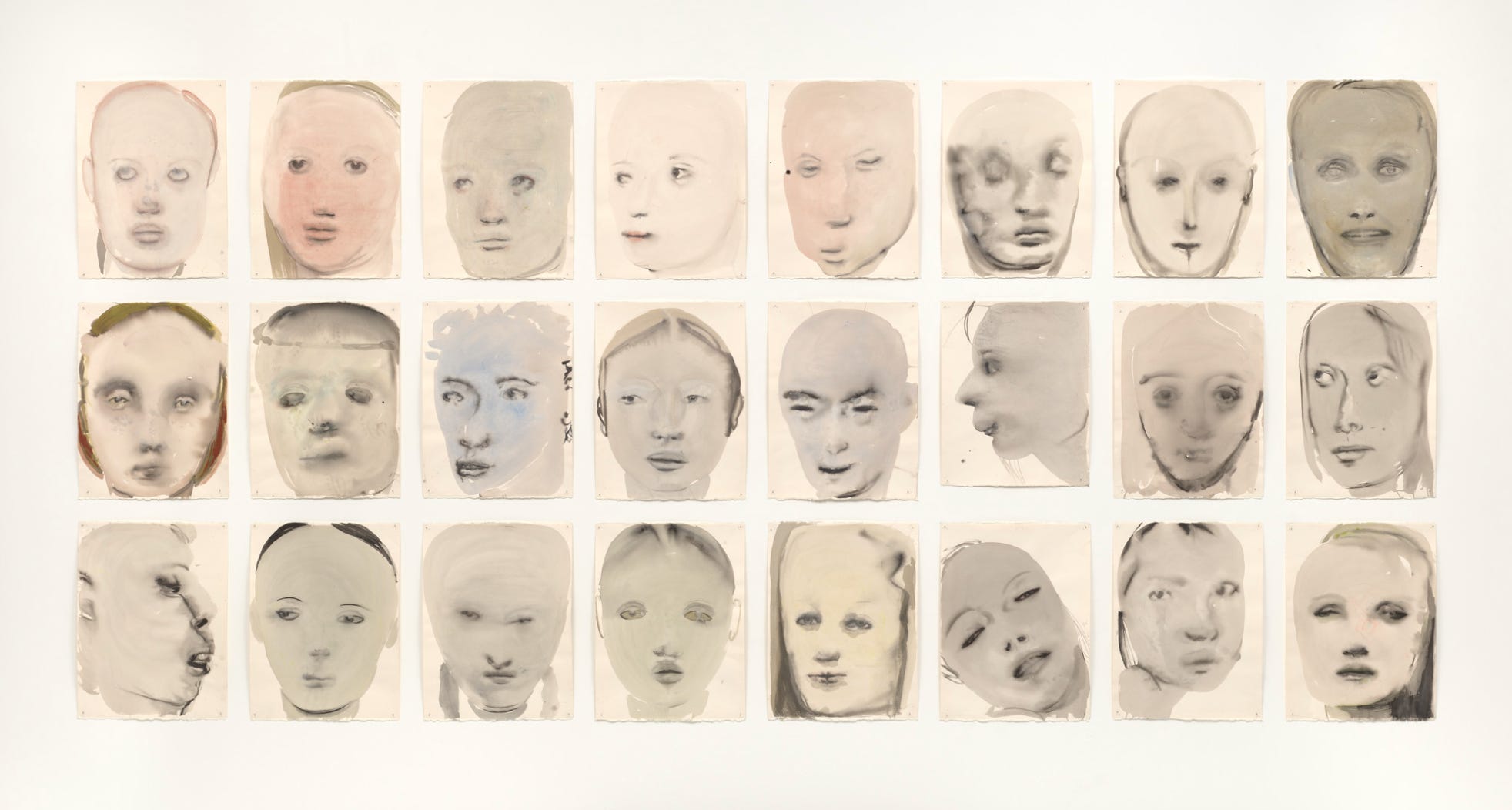
“Community is fool’s gold,” writes theorist Todd McGowan. “We invest ourselves in community to escape the problem of alienation, but this problem returns with a vengeance when we experience our failure to belong to the community.”
It was startling to see such a private feeling articulated in print by a man I’d never met. I’d picked up McGown’s Embracing Alienation at City Lights bookstore in San Francisco, thinking it might be relevant to my book, which in part explores kinship in its various forms, but also the limits of such relations. To McGowan, any type of kinship is shadowed by alienation, which he suggests is not delimited by race, class, immigration status, or sexual orientation, but a near-constant universal experience.
The solution to alienation, we’ve all been told, is to work harder to build and sustain community: to get to know our neighbors, drop off food for ailing friends, chat with our baristas and maintain strong ties with our parents, even if those ties threaten to ruin us. If you haven’t sought out cultural associations, faith groups, and meetup events, then of course you’re doomed. Loneliness is thus equated to laziness.
But even when those strategies work, do they actually work? Does a relationship, a circle of friends, a family always beget belonging? Do any of those beget unconditional loyalty to a place, a people, a politics? McGowan says no. He argues the actions we usually take to belong only deepen our alienation. We try to make friends and it feels one-sided. When our neighbors invite us over, we feel awkward, out of place. We see old friends and feel the distance between our lives. We try to have a conversation with our mother and it wounds us.
Is it that a watched pot never boils? Or does the problem lie deeper?
McGowan argues that we should embrace our alienation instead of seeing it as something to flee from. “Alienation indicates that one is not identical with any symbolic identity,” he writes. And isn’t that a relief? To know I’m not just a daughter, or south Asian, or Canadian, or a writer? At one time or another, I’ve felt rejected in each of these domains, unable to recognize myself in their contours. Other times, I’ve been the one actively trying to escape those identities: being Indian as right-wing Hindutvas keep getting elected to office is nothing to be proud of. But does anyone fully feel at home in such large, rigid landscapes?
Our alienation, McGown argues, is not something to be fought, but our emancipation. This made intuitive sense to me: the times I’ve felt both the loneliest but also the freest and most myself were when I was alone. In my own presence, my identities, behaviors and all their contradictions did not disappear but they did soften, fading into the background.
Rather than investing more of myself in trying to belong to any one community, I can live how I want, knowing that loneliness is anyway the inevitable outcome. That’s not to say that I won’t care for my friends and loved ones, that I won’t try to build new relationships or sustain the ones I have. It just means I don’t expect a sense of unconditional belonging as the payoff. Nothing can fill that god-shaped hole in us—not even god himself.
“The public” is another solution to our alienation, according to McGowan. By this, he means any realm that’s theoretically open to all communities and classes: libraries, parks, buses, rec centers. In these spaces, we are equalized, the rich and the poor, the male and the female, white people and the racialized people—at least in theory. In these spaces are open to anyone, we might meet others who challenge our identities, who question our beliefs or dress or way of talking, and in that discomfort and uncertainty, we might confront who we truly are.
I don’t know if I buy this part of McGowan’s argument. In that (public) park, the jackass who mocked my mask did not deepen my understanding of my self or others. It did deepen my sureness that there are assholes in the world, but that’s about it.
Perhaps one antidote to alienation is not confrontation in public spaces but observation. That evening at the park, I fumed, felt sorry for myself, raged at the world—until I caught the flash of those red-winged blackbirds once more. Until a breeze shivered the golden leaves of an aspen. Until my dog howled at a coyote, long and mournful. Until the moon slipped out from behind the clouds, a shy, perfect crescent.
Beauty does not demand a certain identity to be witnessed; it does not require belonging. It can coexist with estrangement. Indeed, estrangement can deepen beauty, the same way that grief heightens moments of lightness. To feel far away from the world only to suddenly be pulled back in by a sharp magnetic sublime—isn’t that the best feeling in the world? What other belonging could you want?
The last time I visited the central library, a man was cursing out a librarian. I intervened, only for him to curse me out too. No doubt he felt emboldened because both the librarian and I were women, and women of color to boot. And though I did feel some camaraderie with the librarian afterwards, what truly soothed me was the beauty of the books that awaited me—books that were not mine, but whose beauty I could sit with for a while, a few moments or a few weeks, and then pass onto the next person. I find that so moving, this growing, invisible and unacknowledged thread of connection with strangers, a connection possible only in public spaces, as McGowan argues. But books themselves know no strangers; indeed, they exist to make us less strange to ourselves. Isn’t that why we read: to know our particular alienation is not individual to us, but a throughline in almost every major work of prose? Isn’t that what plot is, what tension is? We want to know how others have resolved their alienation so we might do the same.
Too bad life is not a novel and there’s no end until THE END. There’s only life itself, lonely and alienating. There’s only beauty, which rescues us from our estrangement to the world around and within us, if only momentarily. But perhaps that moment is enough for now. We know another will come.
This is really beautiful. I have a mother like that as well. She is now in early stage dementia so her inability to see me is same as ever but I can no longer hold it against her because she is not herself. But she is also more herself than ever — all filters disappearing — so I just watch myself twist in the wind as she continues. Oddly clarifying. And resonates with what you say here about a certain kind of acceptance. Thank you for this moving piece!
Oh I needed this in a week where I feel alienated in so many ways. I am learning to be okay with it, and now you have helped. Thank you